
Murrah
Also known as: Delhi, Kundi, Kali
The world's best dairy buffalo breed and the most widely used for grading up local buffalo across India and abroad. Murrah semen is the backbone of buffalo artificial insemination.
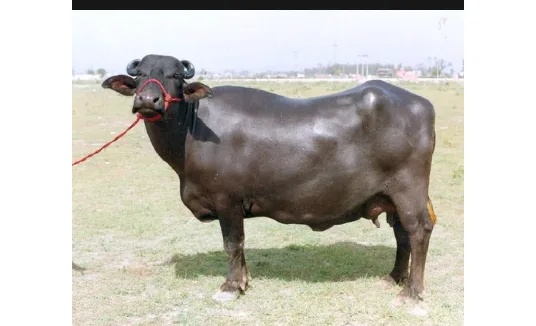 MURRAH
Physical Characteristics
- Colour: jet black, occasionally with white markings on the face and legs
- Short, tightly curled horns — the breed's signature spiral
- Massive body with a heavy, well developed udder and long teats
- Broad, drooping hindquarters and a long, thin tail with a white switch
- Body weight: 550 kg (female), 750 kg (male)
Benefits for Farmers
Highest milk yield of any buffalo breed in the world
Very high fat content commands the best price per litre
Improves the yield of any local buffalo through AI within one generation
Adapts to a wide range of climates from Punjab to Bihar and the south
Improve your herd with Murrah genetics
Artificial insemination with proven Murrah semen is the fastest and cheapest way to upgrade a local herd — no bull to maintain, no disease risk, and a measurable jump in yield within one generation. Our AI training covers semen handling, heat detection, insemination technique and follow-up.
Breed Profile
- Species
- Buffalo
- Utility
- Milk
- Home Tract
- Rohtak, Hisar, Jind, Jhajjar, Gurgaon and the Delhi region
- Found In
- Haryana Punjab Delhi
- Yield
- 1,500–2,500 kg per lactation; 7% fat
Other Buffalo Breeds
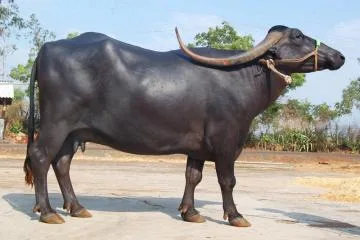 Pandharpuri
Milk
Pandharpuri
Maharashtra, Karnataka
Instantly recognisable by its extraordinarily long, sword-like horns, this buffalo of western Maharashtra is a hardy migratory milker.
1,200–1,700 kg per lactation; 8% fat
View Details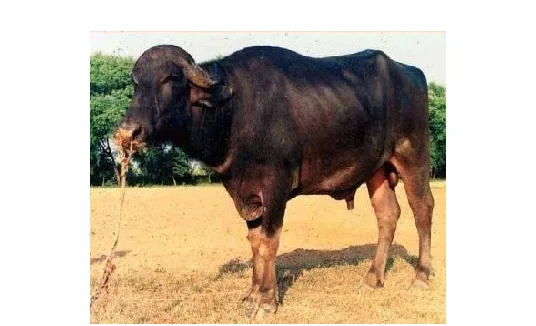 Bhadawari
Milk
Bhadawari
Uttar Pradesh, Madhya Pradesh
A copper-coloured buffalo of the Chambal ravines, producing the highest fat milk of any buffalo in the world — up to 13% in some animals.
800–1,000 kg per lactation; 6–13% fat
View Details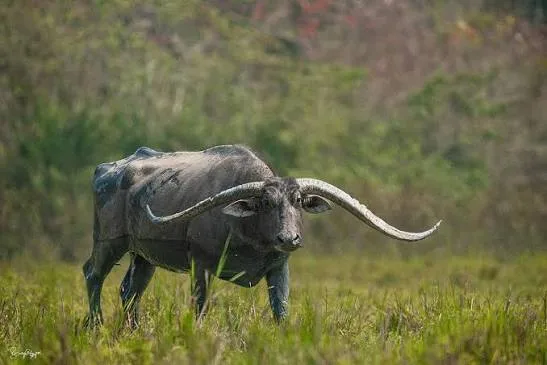 Draught
Luit (Swamp Buffalo)
Assam
India's only registered swamp buffalo type, genetically distinct from the river buffalo of the mainland and central to paddy cultivation in the Brahmaputra floodplain.
300–500 kg per lactation (kept mainly for draught)
View DetailsNeed course guidance?
Our team is ready to help you choose the right training program.